
Many people confuse honing with sharpening. Although both processes are related to knife sharpness, they serve completely different purposes.
What Is Honing
Honing is a process in which a honing rod (steel) is used to realign microscopic deformations (micro-burrs) along the knife edge. A honing rod does not remove a significant amount of material; instead, it smooths and straightens the edge to maintain sharpness between full sharpening sessions.
You can think of it like repairing the surface of an asphalt road. Major damage is filled in and the road becomes much safer, but it will never be as good as a complete reconstruction with a brand-new, uniform surface.
What Is Sharpening
Sharpening is a process in which steel is actually removed—using a whetstone, grinder, or another sharpening tool. During sharpening, we create a new bevel or repair a damaged edge.
Why a Honing Rod Is Not a Replacement for Sharpening
- A honing rod only realigns the edge; it does not restore a sharp profile.
- If you rely solely on a honing rod and neglect sharpening, the edge will gradually become fatigued and lose its geometry.
- Regular sharpening is essential for maintaining a sharp and efficient cutting edge.
The Importance of Accurate Angle and Goniometry
The physics of hard materials is such that the higher the hardness of steel, the more brittle it becomes. With knives, we expect long-term resistance to wear and deformation, which means higher hardness. Knives made from hard steel are extremely sharp, and their thin edges retain sharpness for a long time.
However, a thin and hard edge is also brittle—it does not dent or dull easily, but under higher stress it can chip or fracture. This is why, for example, Japanese knives are often made as a sandwich construction: a hard steel core with softer steel on the sides.
With hard steel, it is possible to choose a larger sharpening angle so the thin edge can withstand stress while remaining sharp for a long time. With standard knives, a smaller sharpening angle is usually chosen to achieve higher sharpness, but sharpening must then be performed much more frequently.
Without the correct angle, both honing and sharpening become far less effective. A properly set angle is the foundation of consistent and high-quality sharpening.
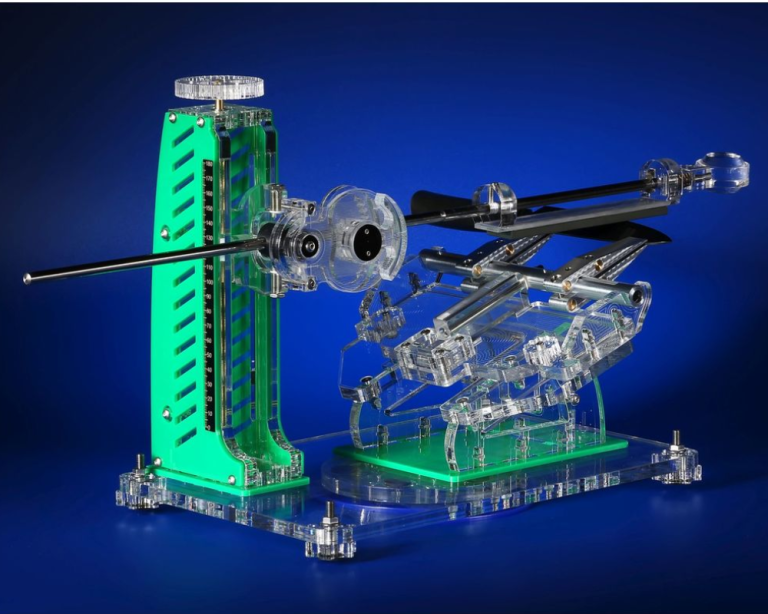
EdgeON goniometers allow precise measurement of the sharpening angle, which is crucial for effective sharpening as well as accurate honing. EdgeON sharpening systems then provide a stable environment to maintain that angle throughout the entire sharpening cycle.
How to Integrate Honing and Sharpening into Your Routine
- After each use of the knife, make a few strokes with a honing rod to realign the edge.
- From time to time (depending on usage), perform full sharpening using a whetstone or a sharpening system.
- Use a goniometer and guide to check and set the sharpening angle.
- At the end of sharpening, you can perform light honing to achieve a finer and sharper edge.
Recommendations and Products
- Honing rod: A high-quality ceramic or steel honing rod for regular maintenance.
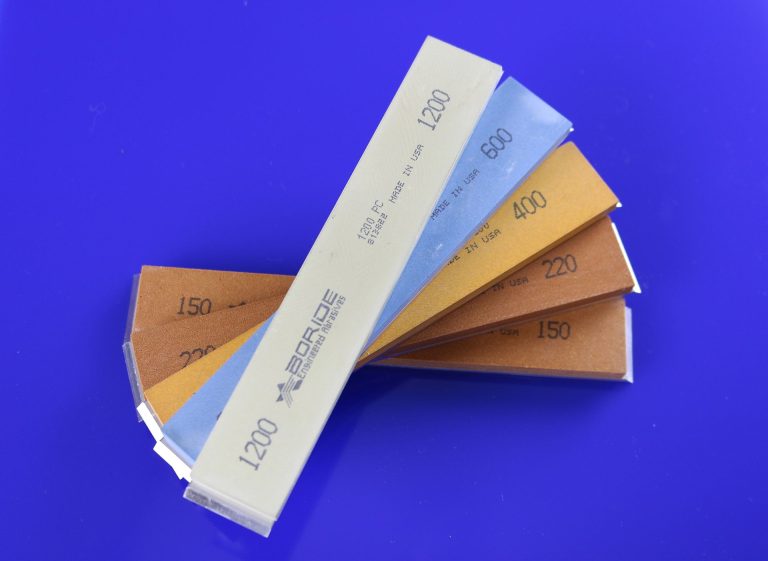
- Sharpening: Water stones of various grits (see the dedicated article).
- Precision tools: EdgeON goniometers + EdgeON sharpening station.
Conclusion
Sharpening and honing are not the same—they complement each other. For sustainable knife sharpness in a home environment, having the right tools, including precise angle measurement, is essential. With our EdgeON systems and EdgeON goniometers, you can easily implement efficient and consistent sharpening for all types of knives, even without any prior experience.