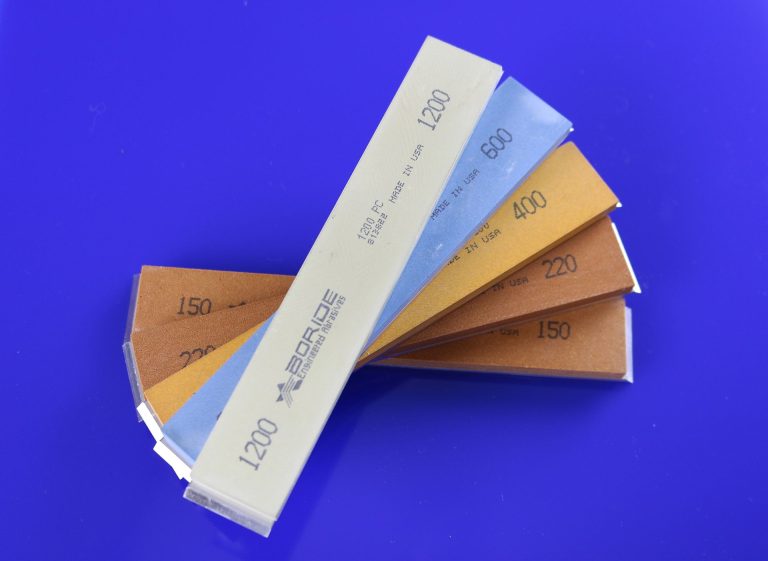

When deciding between a waterstone and a diamond stone, consider sharpening speed, cost, maintenance, and the type of steel you are sharpening. Each type has its advantages and limitations.
Waterstone – Pros and Cons
Advantages:
- Fast sharpening due to the formation of slurry (a paste-like abrasive layer).
- Wide range of grits, allowing for fine polishing.
- Easy to clean – just use water.
Disadvantages:
- Stones wear over time and require flattening.
- Often need soaking before use (some stones 10–15 minutes).
Diamond Stone – Pros and Cons
Advantages:
- Extremely fast and aggressive sharpening – diamond is one of the hardest materials.
- Maintains flatness – diamond plates rarely lose their evenness.
- No soaking required – some diamond stones can be used dry or with minimal water.
Disadvantages:
- Can be more expensive per gram of abrasive.
- Finer diamond stones may not give the same “razor-sharp” polish as very fine waterstones (depends on grit).
- Dry use can cause overheating or faster edge wear if not careful.
Comparison: Speed, Cost, and Maintenance
- Speed: Diamond wins for coarse sharpening and repair – material removal is faster than with a soft waterstone.
- Cost: Diamond stones are usually more expensive, especially lower-grit stones with high diamond concentration.
- Maintenance: Waterstones need regular flattening; diamond stones minimize this need due to flatness retention.
Which Type is Right for You
- For frequent repair of damaged blades and rapid material removal: diamond stone.
- For fine sharpening, polishing, and achieving a high shine: high-grit waterstone.
- Practical combination: diamond for coarse work + waterstone for finishing and polishing.
Role of Angle and Goniometer with Different Stones
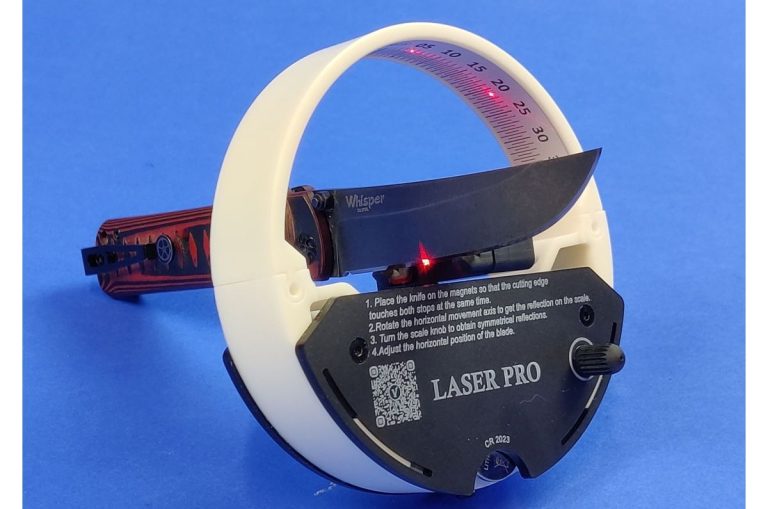
Without precise angle measurement and maintenance, there’s a risk of “cutting through” the edge or creating an asymmetrical bevel during fast diamond sharpening. Using an EdgeON goniometer provides accurate angle information and simplifies angle setup for every sharpening session. Combined with EdgeON sharpening systems, which provide a stable platform and precise guiding mechanism, you can achieve safe, accurate, and repeatable sharpening – whether using a waterstone or diamond stone.
Recommendations for Home Users
- Start with diamond if restoring the edge or profile.
- Add a quality waterstone for finishing and polishing.
- Use a guide system and goniometer to maintain a consistent angle and minimize errors.
Conclusion
The choice between waterstone and diamond stone depends on your needs: how often you sharpen, what you sharpen, and your skill level. Regardless of choice, proper angle setup and stable guidance are crucial – exactly what EdgeON goniometers and systems provide. Investing in these tools improves control, repeatability, and sharpening quality, even for beginners.